Integrated Design-Build vs. Full-Service Consultancy: What’s the Difference?
Integrated design-build is a project delivery method in which a single entity, usually a contractor working with designers under one contract, takes responsibility for both designing and building a project. A full-service consultancy is a multidisciplinary firm that brings architecture, engineering, and project or cost management together under one roof to advise, design and manage a project, without necessarily building it.
Both terms promise “integration”, but they integrate different things. Design-build integrates design and construction execution. A full-service consultancy integrates multiple professional disciplines around the client’s interests.
What Is Integrated Design-Build?
According to the Design-Build Institute of America (DBIA), design-build is “now the fastest growing and most commonly used project delivery method in the United States,” projected to represent over 47% of construction spending by 2028. Its defining feature is a single point of responsibility. Instead of an owner signing separate contracts with a designer and then a contractor, one design-build entity is accountable for the project from concept through completion.
How does design-build change risk and speed?
The single-contract structure changes how risk and speed work on a project:
- Design and construction can proceed in parallel, allowing fast-tracked schedules
- The design-builder carries responsibility for budget, schedule and quality as one party
- Risk shifts away from the owner and toward the party best equipped to manage it
- Collaboration between designer and builder tends to reduce change orders, claims and disputes
How does design-build compare with design-bid-build?
In the traditional design-bid-build method, an owner hires designers to complete plans first, then runs a competitive bid for a contractor to build them. Design-bid-build offers more cost predictability up front, because bidding happens against a complete design. It also creates a sequential, sometimes adversarial handoff between designer and builder, and any design issue found mid-construction becomes the owner’s problem to resolve.
What Is a Full-Service Consultancy?
A full-service, or multidisciplinary, consultancy integrates along a different axis. Instead of unifying design and construction under one contract, it unifies multiple professional disciplines inside one firm, typically architecture, structural and civil engineering, MEP engineering, and project or cost management.
What are the benefits of a full-service consultancy?
The benefits are less about who builds and more about how decisions get made:
- One accountable team coordinates architecture, engineering and cost management from the same shared drawings and models
- Conflicts that would normally become disputes between separate vendors, such as a structural clash with an architectural floor plan, get resolved internally before they cause delays
- The client deals with a single point of contact across disciplines instead of managing several external firms
- Coordination risk that an owner would otherwise absorb by managing separate consultants is consolidated inside the consultancy
Does a full-service consultancy build the project?
Typically not. A full-service consultancy is a design and advisory business. It may work alongside a separate contractor who builds the project, or it may be engaged because the client wants integrated design and cost oversight without handing construction risk to a single design-build entity.
Design-Build vs. Full-Service Consultancy at a Glance
| Aspect | Integrated design-build | Full-service consultancy |
|---|---|---|
| What is integrated | Design and physical construction | Multiple design, engineering and advisory disciplines |
| Contract structure | One contract, single responsible entity | Typically a professional services appointment, separate from the construction contract |
| Who carries construction risk | The design-builder | The contractor, if a separate one is engaged |
| Best known for | Speed, cost certainty, single-source accountability | Coordinated design, reduced rework, single point of contact across disciplines |
| Client relationship | One party for the whole build | One advisory team across feasibility, design, engineering and cost management |
Why Do Design-Build and Full-Service Consultancy Get Confused?
Both models are marketed with the same language: “one team”, “single point of contact”, “integrated delivery”. The difference is what the integration covers.
Design-build answers who is contractually responsible for turning a design into a finished building. Full-service consultancy answers whether the architecture, engineering and cost management on a project come from one coordinated firm or from several independent firms the client has to stitch together.
A project can combine both: a full-service consultancy handles design and cost oversight, then feeds into a design-build contractor for execution, or into the consultancy’s own engineering arm.
How Does Archetype Group Operate as a Full-Service Consultancy?
Archetype Group is structured as a full-service, multidisciplinary consultancy, not as a design-build contractor. Since 2002, it has delivered more than 1,500 projects across 50 countries by bringing Architecture & Master Planning, Building Engineering, Industrial & Process Engineering and Project & Cost Management together under one roof.
A client works with a single coordinated team across the project lifecycle, instead of assembling separate architects, engineers and cost consultants.
Capital Place, Jakarta: construction management as one accountable team
Capital Place is a 206,000 sqm mixed-use development in Jakarta anchored by a Four Seasons Hotel. Archetype Group provided construction management across the project’s premium hospitality and commercial spaces in Jakarta’s central business district. It coordinated the technical and commercial sides of delivery as one accountable team, not as separate, disconnected consultants.

Image: Capital Place. Alt text: Capital Place, Jakarta, construction management by Archetype Group across a 206,000 sqm mixed-use, Four Seasons-anchored development.
Unilever Savory Factory, Cikarang: the same model in industry
The Unilever Savory Factory in Cikarang, Indonesia, shows the same model applied to industrial work. For this 19,000 sqm food manufacturing facility, Archetype Group delivered EPCM services, architecture, engineering, cost management and construction management, together with green consultancy input, as one integrated scope instead of separate contracts handed to different firms.
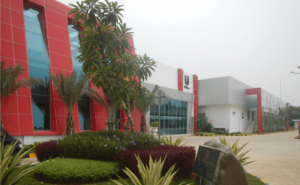
Image: Unilever Savory Factory. Alt text: Unilever Savory Factory, Cikarang, Indonesia, EPCM services (architecture, engineering, cost management and construction management) by Archetype Group.
Frequently Asked Questions
Is a full-service consultancy the same as a design-build firm?
No. A design-build firm holds a single contract covering both design and physical construction. A full-service consultancy brings multiple design, engineering and advisory disciplines together in one firm, but it is typically a design and management business, not the contractor building the project.
Which model reduces risk for the client?
Design-build shifts construction risk onto the design-builder, because one entity is accountable for budget, schedule and quality together. A full-service consultancy reduces a different kind of risk, the coordination risk between disciplines, by keeping architecture, engineering and cost management inside one accountable team, even if a separate contractor still carries construction risk.
Can a project use both models at once?
Yes. A full-service consultancy often handles design, engineering and cost management, then hands off to a design-build or general contractor for construction, or works alongside one. The two approaches integrate different parts of the project and are not mutually exclusive.
Why do multidisciplinary consultancies matter on complex, cross-border projects?
On large or international developments in hospitality, industrial or mixed-use sectors, keeping architecture, engineering and cost management inside one coordinated firm reduces the handoff delays and disputes that occur when an owner manages several independent consultants across different markets and time zones.
To discuss the right delivery model for your project, explore Project & Cost Management or get in touch at archetype-group.com/contact-us.